Monday, 10 March 2008

Socialist Party and the Commanding Heights


Reading Marxist Economist Rudolf Hilferding on finance capital I came across the Hilferding quote that "taking possession of six large Berlin banks ... would mean taking possession of the most important spheres of large scale industry".

Writing in the introduction to the translation, Tom Bottomore recognises that Hilferding would not equate this process with socialism, instead understanding this as one step on the road towards it, he does however suggest that:
the development of the capitalist welfare states since WW2 has depended very largely on gaining control of the 'commanding heights' of the economy in this sense, and that any further advance towards democratic socialism in the Western societies can only follow the same course (Finance Capital, Hilferding:9)
I presume that Bottomore is working upon the same distinction Hilferding refused to make between the formal 'bourgeois democracy' of the Weimar republic and the proletarian democracy that would be sought to replace it. A view largely in accord with the notion that thanks to the 'socialization' of the economy it no longer become necessary for the state to be 'smashed', but instead "taking it over and extending its role in planning and controlling socialized production" was the necessary step towards socialism (9).

However the notion of 'conquering the commanding heights' of the economy (as a step either towards, or the realization of, Socialism) retains a relevance beyond the fact that it has been "predicated for almost a century by the leaders of the social democratic labour movement" (106 Mesaros)

It was the Labour- entryist organisation, Militant, who argued that Socialism could be achieved by an "enabling bill" passed through parliament. Within Militant issue 767b, 27th September 1985 we find the following suggestion from Rob Sewell:
A Labour government is always elected in times of crisis, when the desire for change is at its highest . . . Instead of bowing the knee to capital and hoping to run capitalism better than the Tories, it should immediately push through an emergency `Enabling Act' through Parliament.
Former Socialist Party member Comrade Michael Wainwright challenged the party to provide a justifiction of the politics in an article titled Marxism and the state: an exchange. Seeking to defend the indefensible the Socialist Party's Lynn Walsh replied with the suggestion that such action must be taken in association with "a plan of production, and workers’ control and management of industry", which of course must be international. That the comrade felt the need to suppliment the demand for the Labour Movement to take control of the "commanding heights of the economy to be nationalised" as a means towards achieving Socialism, with the need for "workers control" is all the more pognient given the relative abscence of any discussion of workers control in articles calling on the Labour government to Nationalise Northern Rock during much of the discussion of the 'looming recession'.

In Issue 517 of the Socialist in a short piece titled 'Shock of Recession draws near' the paper limits itself to favourably quoting Liberal Democrat Vince Cabel, the logical culmination of this politics is an article that would not be out of place among any one of a number of Liberal Democrat Party press releases. The Socialist Party note in the same issue of the paper that at the time the Labour Government was already "effectively part nationalising the bank". Why did it do so? It should come as no suprise to comrades that it would go on to Nationalise the bank "simply as a temporary response to a crisis, to be contained within the overall determination of capital as a mode of control, without affecting in any way whatsoever the fundamental command structure of the system itself" (Meszaros, Beyond Capital: 106).

The justification of this politics from Walsh, which the comrade admits "would not add up to a socialist society" is an understanding of the "partial" nature of Transitional Demands. The only problem being in this instance that the demands are in no way transitional. Rather more ingenious, than the fig-leaf of Transtionalism, is the suggestion by Comrade Walsh that such moves would provide the "social foundations on which the working class could proceed to build a socialist society". This view maintains an intellectual continuum with the politics of the Social Democratic Labour Movement though certainly not with Leon Trotsky.


Friday, 7 March 2008

Student Respect: "Be reasonable, demand the possible"


The role of Student Respect post Galloway has been an interesting topic of contention among many leftists: what would happen to the formation following its split at a national level we all mused. Prior to this split many of us witnessed long-standing comrades within the Socialist Workers Party (SWP) ditching depleted Socialist Worker Student Society (SWSS) meetings for ‘vibrant’ joint Respect events, Comrades close to the political project of the Socialist Workers Party rebranded themselves as ‘Student Respect members’ within the pages of Socialist Worker and on campuses for the sake of the party’s latest turn.

With good reason too, as SWP Central Committee member John Rees noted in response to Galloway, the SWP has “sunk significant resources into creating Student Respect” [1], without a trace one might have added. The need to substantiate the rationale for such a move with the talk of ‘great gains ahead’ makes political sense in this context.

On that basis in September of 2007 John Rees provided the following suggestion:
(Student Respect) … has had significant electoral success in local colleges and at the NUS conference. Student Respect has reshaped the left in the colleges
We may ask what to make of reports of the recent gains of student Respect in campuses as wide ranging as Essex and Goldsmiths in reference to this quote.

A report in the 8th of March issue of Socialist Worker noted the election of what were billed as a 'left slate' of 7 candidates. Beyond the spin, the gains made at Goldsmiths were not those of the SWP, but instead the rather heterogeneous sounding 'left' [2]. Only two of those elected were actually Student Respect members: Campaigns and Communications Officer, Jennifer Jones and James Haywood, Campaigns Coordinator. Prior to the election Respect were listing only Jennifer Jones and Grace Lally as Respect Candidates under the optimistic sounding heading: “this month we can take Goldsmiths back” [3]. Returning to the Socialist Worker 'Reports Roundup' the conclusion drawn on the basis of this election, namely that “this vote shows that radical politics are winning a massive hearing among students” seems even less assured.

Candidates stood on platforms almost indistinguishable from those of non-slate candidates. There was no direct mention of the subordination of education to the needs of a market economy within the manifestos of the Student Respect comrades; Where mentions of cuts to services do exist, it is only on the basis of the suggested mis-management of a University that "treats our Union with complete contempt" and the need for a better managed Union. Variations of similar themes ran through-out the election manifestos of all contestants. Noting that the union should be a "campaigning force on behalf of all our members" retains very little purchase in a context in which both left and right have adopted similar rhetoric of accountability and democracy, if just for the sake of getting elected.

While the references were different, and i'm certain the intentions varied, both left and right broadly accommodated themselves to the bureaucratic and largely economistic character of left student politics.

The manifesto of Student Respect member Grace Lally noted the sorry state of student politics in reference to the fact that: "Goldsmiths used to be synonymous with radical student activism" [4]. Ironically the comrade has a point.

Were they to probe the issues 'of relevance to students' at a slightly deeper level they may come to the conclusion that reforms identified on the basis of the needs to render education more responsive to a market economy are not a new phenomenon. The 1960s Fouchet Reforms (named after the then Minister of Interior from 62 to 67) proposed to "install more difficult entrance exams, a more intense selection process, and a sort of “second-rate” degrees, which would be available after two years of study" [5]. Opposition to the Fouchet Reforms would form part of the radicalised student movements leading to May 1968. A movement that would influence the role played by students outside of France, popularizing the use of occupations of University buildings.

The comrade politics is all the more interesting in a context in which the slogans inspiring these "radical movements" find little echo among the existing left. We should have no illusions in documents produced during the period, the politics often expressed remained deeply flawed and partial. However, the willingness to engage with the the implications of Modern capitalism for education, beyond simply lamenting its manifesations, is athema to Student Respect's political project.


[1] http://www.labourhome.org/story/2007/9/19/32556/3993
[2] http://www.socialistworker.co.uk/art.php?id=14309
[3] http://www.respectcoalition.org/?ite=1768
[4] www.goldsmithsstudents.com/export/sites/Goldsmiths/upload_gallery/ManiBooklet.pdf
[5] minds.wisconsin.edu/bitstream/1793/18448/1/GatesVickeryS07.doc

Thursday, 6 March 2008

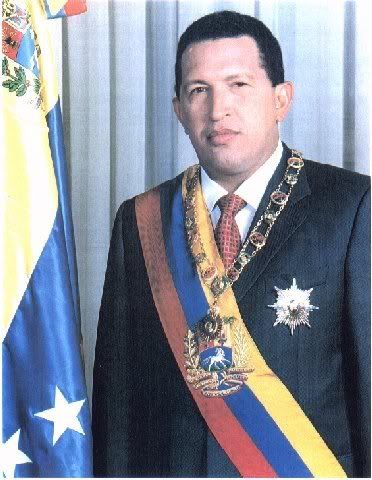
Venezuela & Chavez


The Weekly Worker claims a unique position on the basis of the majority of the “leftist commentators” who have provided commentary upon a fairly limited section of the ‘progressive’ reforms within the proposed constitutional amendments, at the expense of those which sought to consolidate the arguably substantial power base of the Venezuelan leader (Chavez Suffers Major Constitutional Setback). The WW is quite right to note the absence of an engagement precisely on the ‘democratic deficit’ apparent within the proposed reforms of the Venezuelan constitution.

The role of Marxists on this basis is clear: to understand the nature of Venezuelan presidency and on this basis draw necessarily correct conclusions. Related to this point, Nick Rogers is right to highlight the need for an independent Working Class voice.

In reference to the ability to cultivate such a voice, it is perhaps worth making explicit the fact that “tying the working class and its organizations to bourgeois ruler serves to impede independent working-class struggle”. Related to this point, the need to “establishing the class independence of the proletariat from all wings of the bourgeoisie—no matter how “progressive” or “anti-imperialist” their proclamations [1] remains readily apparent during this process, alongside the role of a revolutionary, internationalist workers party through which this aim may be realised.

The potential for the consolidated power of a bourgeois ruler to in turn be used against an independent working class force may been noted in reference to the fact that “the presidency – no matter who occupies it – remains an institution of the bourgeois state which be it said revolutionaries are in favour of totally abolishing not strengthening” [2] as Workers Power have rightly suggested.

Despite this Workers Power curiously criticise the “modesty” of the proposed reforms for not abolishing the “the 1999 constitution's protection of private ownership of the land, the factories, the banks, the media etc”. Such an approach of course ignores that such provision would be unlikely to be destroyed precisely because these remain intrinsic to the nature of Chavez’s bourgeois political project. The role of Marxists during this process is not to challenge the ‘immodesty’ of such leaders but to instead turn to those organised forces able to play a progressive role within the region, precisely by ‘sweeping away’ the bourgeoisie regime.


[1] http://www.spartacist.org/english/wv/archives/oldsite/2004/Venezuela-831.html

[2] http://www.workerspower.com/index.php?id=156,1498,0,0,1,0

Sunday, 2 March 2008

The Left & the Homosexual Question: Germany


The reaction of the socialist left to the 'homosexual question' has a rich and varied trajectory, I will attempt to provide a brief outline to some of the main themes. In order to understand the nature of the left's reaction to the issue of what we would now term 'gay rights', an understanding the historical contexts occasioning the call or protection of marginalized sexual minorities is needed.

At the end of the 19th century there occurs a particular tightening of laws in reference to 'homosexual' or same-sex sex acts, this is expressed in the UK in the form of the Criminal Law Amendment Act of 1885 and within Germany via Paragraph 175 of the German Legal code.

Paragraph 175 of the German Legal code introduced a provision of the German Criminal code from 1871 onwards punishing "unnatural fornication" among "persons of the male sex" as a criminal offense punishable by imprisonment and potential "loss of civil rights"[1].

It may be noted that during a period following the introduction of Paragraph 175 "until Hitler's accession to power in 1933", movements of opposition to the criminalisation of same-sex acts, among both "homosexual emancipation movement" and socialists remained unrivaled in neighboring european states; a fact partially reflected by the petition of the Reichstag by the formation of what has been termed the first "gay liberation organization" in the form of the Scientific Humanitarian Committee, formed in 1897 [2]. The extent to which we can logically align this organisation to the political trajectory of "gay liberation" is deeply questionable, yet it’s formation does say something about the response the law engendered from a range of Germanic society.

We find an expression of opposition among socialists expressed by many of the leading members of the Social Democratic Party of Germany (SPD) during this period. August Bebel, co-founder and parliamentary leader of the SPD of Germany was the first politician to speak within the Reichstag against the criminal code in 1989, supporting a petition calling for the repeal of the statute. Bebel noted that in a society in which so called 'unnatural fornication' is prevalant among "all sections of society", enforcement would require the Prussian state to "build two new penitentiaries just to handle the number of violations against Paragraph 175 committed within the confines of Berlin alone" [2].

Sections of the Social Democratic reichstag representatives delegates "distanced themselves firmly" from Bebel, while a commitment to the rights of Homosexuals did not remain an approach articulated within the political programme of the SPD [3]

However Bernstein would not be an isolated figure in opposition to Paragraph 175, other prominent members of the German Social Democratic Party would oppose the statue and raise issues of relevance to the rights of persecuted sexual minorities. Within one of two articles published in Die Neue Zeit leading SDP theorist Eduard Bernstein elaborated a view upon the trial of Oscar Wilde, prosecuted under the Criminal Law Amendment Act, within the United Kingdom. Bernstein including an acknowledgment that

within the German social-democratic movement, very far-reaching differences of opinion regarding the position society should adopt towards those sexual activities which do not fall within the ambit of what passes for normal [4]

In understanding how to characterise the 'crime' for which Wilde had been persecuted, Bernstein rejects judgements "based on more or less arbitrary moral concepts" instead noting the historic variability of what are considered 'unnatural acts' in reference to the historic prevalence of same-sex sex acts within Greek and Roman society.

[1] http://en.wikipedia.org/wiki/Paragraph_175

[2] http://www.workers.org/ww/2004/pride20610.php

[3] Leftist Sexual Politics and Homosexuality: A Historical Overview

[4] http://www.marxists.org/reference/archive/bernstein/works/1895/wilde/homosexual.htm

The National Union of Students (NUS) and the struggle for gay liberation


In order to understand the prominence of commitments to Lesbian, Gay, Bisexual and Trans (LGBT) rights within the organizational structures of the National Union of Students an understanding of the historical trajectory and emergence of such rights is necessary.

The formation of Gay Liberation movements during the 1970s reflected a rising level of 'radicalized' anger among marginalized of LGBT minorities, influenced most clearly by the 1969 Stonewall Riot in New York. The Stonewall Riot followed a 'raid' upon a gay drinking establishment in Greenwich Village, as punters turned their attention to the invading police force and met the routine harassment with resistance. The Stonewall Riots would influence the formation of 'Gay Liberation' movements within both America and the United Kingdom.

Despite the eventual dissipation of the Gay Liberation, under the pressure of conflicting internal differences, the organization would prove influential. Its legacy is expressed, albeit in a partial and conditional form, in the formation of a gay and lesbian 'movement' within NUS. As the NUS document 'Liberation officers in Every Union' notes, while there existed no "formal national campaign" in the early 1970s during the movements height, by 1971 the "first explicit policy on lesbian and gay liberation was passed by annual conference", while by the mid 1990s a specific LGB Campaign had been formed [1].

A degree of representation of minority groups has been ensured by utilising organisational structures for this purpose; regular LGBT conferences are meant to "democratically set the policy that gives the political direction to the campaign" alongside the election of LGBT officers [1].

While there rightly exists structures to ensure the representation of marginalized groups within the NUS, part of the proposed Governance Review of 2007/08 includes proposals that would attack 'Liberation' sections such as that of the LGBT Campaign.

Proposals include attempts to split the existing NUS national executive into a "board" and a "senate" in which the senate will include representatives of each liberation campaign, in contrast to the 'non-political' board that will meet a limited number of times a year and be comprised in part by external appointees. The board has been created to over-see "legal policies, the “strategic planning framework”, the wages of senior management, development of budgets and estimates, scrutiny of financial performance, scrutiny of senior management and appointments" [2]. It remains the case within the existing proposals no Liberation officer is ensured a place on a board that will possibly scrutinize their work.

Communists must be at the forefront of those defending the autonomy of the campaigns as the most consistent supporters of the rights of minority groups, however beyond simply seeking to defend the existing structures of NUS, questions must be raised about the reasons for dwindling LGBT conference sizes and the failure of many of the Liberation campaigns to resonate with students.

Priority campaigns are those said to be "based on the policy" decided upon at NUS LGBT conference meaning broadly that the LGBT committee, proposed of those elected at LGBT conference, "decide upon the priority areas for the year ahead" [3]

The existence of many of the campaigns remains unknown to most students, while the limited scope and visions they express reflect a growing apolitical trend within student politics. The mismanagement of these campaigns is assured by a situation in which so-called ‘independents’ have been able to secure election as LGBT officers. This is a process aided by the general lack of awareness of most students that annual LGBT conference is even taking place.

Accommodation by the left to the narrowness of the campaigns proposed is likely to result in the depoliticisation of many students, who have and will continue to turn away from the increasingly sectional, individualistic and apolitical politics pursued by the campaign.

The need to raise demands that speak to everyday existence of LGBT students remains clearly evident. As Lenin once noted Marxists must seek to "react to every manifestation of Tyranny and oppression, no matter where it appears, no matter what stratum or class of the people it affects"[4] on the basis of an understanding that the project of Marxism is the project of human emancipation, possible only on the basis of collective liberation in which the opportunity for each individual's self-development is recognized and made a reality. This remains the only way that emancipation, irrespective of individual sexuality, may be won and sustained.


[1] A Liberation Campaign In Every Union

[2] http://www.free-education.org.uk/?p=393

[3] NUS LGBT Priority campaigns 2005-06

[4] Lenin, What is to be done?

Tuesday, 19 February 2008

Once More With Feeling: musings on the Soviet Union


Ukrainian born Leon Trotsky assumed positions of prominence within both the Russian Revolutions of 1905 and 1917, holding high-ranking ministerial office within the newly formed Soviet government following the successive October revolution. During the early 1920s Trotsky led movements of opposition to the newly emerging Soviet bureaucracy, before his eventual expulsion in from the Communist Party and deportation from the Soviet Union in 1929.

It is during this subsequent period that Trotsky began to develop a theory of the Soviet Union’s development as conforming to that of a ‘degenerated workers state’. An understanding I will seek to expand upon in greater detail.

The starting point for a discussion of the nature of the soviet State remains the initial characterisation of the Soviet Union as that of the world’s first workers state emerging organically from the 1917 October revolution.

Within the early 1920s we begin to see the development of forms of 'bureaucratic deformation' within the USSR. The emergence of the young bureaucracy, originally subordinated to the wider agency of the working class, begins to grow independent from this constituency.

This growth of bureaucratic deformation remains bound with a series of historic catastrophes for the working class. The principle features of decisive importance included “the backwardness of the peasantry, the weariness of the proletariat and the lack of decisive support from the West” (1). The hasty retreat of the German Communist Party provides one glaring example of this. This retreat occurred during a period in which many Russians looked to Germany as the most likely basis for the international growth of revolution. This failure remains of decisive importance for the consolidation of power of the growing bureaucratic regime.

The characteristic features of the Bolshevik Party internal life during the initial years of the revolution may be broadly understood as belonging to the organizational method of democracy centralism; this enabled freedom of criticism and the intellectual struggle of competing ideas. As has been noted, “the history of Bolshevikism is the history of the struggle of factions” (2).

In the contexts of an escalating civil war, blockade and famine within the newly formed workers state, temporary measures of self-defense were taken to prohibit opposition parties.

A series of successive measures, “by means of a number of minor civil wars waged by the bureaucracy against the proletarian vanguard”, enable an understanding of the eventual dominance of a bureaucratic caste (1).

The prohibition of alternative parties and internal factions is transformed in understanding from a temporary evil necessitated by a hostile Civil War, to an elevated "principle" (3). The vibrant internal life of the Bolshevik Party, within which there existed a struggle of ideas, groups and factions, is replaced with the threat of internment in concentration camps, exile or death.

Power is transferred from the mass organizations upon which the successful revolution depended, as democratic centralism finds its distorted expression within the bureaucratic centralism of the ‘dictatorship of the bureaucracy’.

This usurpation of this power is enabled only because the “social content of this ‘dictatorship of the bureaucracy’ is determined by those productive relations that were created by the proletarian revolution” (1).

The ‘dictatorship of the bureaucracy’ is forced to defend the property relationships established by the proletarian revolution, for the purpose of maintaining its own interest; while at the same time representing the “worst domestic brake on progress, the greatest internal source of danger to the workers state, and an absolute obstacle to socialist revolutions outside the Soviet Union” (4).

The task that flowed from this is analysis was the need for a political movement to overthrow the bureaucracy for the purpose of the preservation of the existing property relations. Without the working class militating to crush the bureaucracy and open the way for socialism:

The bureaucracy, becoming ever more the organ of the world bourgeoisie in the workers’ state, will overthrow the new forms of property and plunge the country back into Capitalism (5)

Trotsky was entirely correct in this analysis, as substantiated by subsequent historical events, to the great misfortune of Russian workers who have witnessed a steep decline in life expectancy and the great many destructive uncertainties of capitalism. On the basis of the then still existent Soviet Union property relations, implying the curtailing of the rights of capital and the limited monopoly of foreign trade, adherents of global capital perceived the USSR as an irreconcilable enemy and welcomed this development. The subsequent restoration of capitalist property relations heralded a period within which the ideas of Marxism were said to be defeated.

Trotskyism ‘carried the torch’ during the dark years, highlighting the deformations that were elevated to ‘principles’ on the basis of the needs of the bureaucratic caste that had assumed power. It is upon the Marxist tradition, upheld by Trotsky, that we must seek to build to the appropriate lessons of the Soviet Union in our fight for new October revolutions.


1) http://www.marxists.org/archive/trotsky/1935/02/ws-therm-bon.htm

2) Trotsky, L. The Revolution Betrayed. Pg.91.

3) Trotsky. L. RB. Pg.240.

4) http://www.marxists.org/history/etol/newspape/isr/vol21/no1/hansendeutscher.htm

5) http://www.marxists.org/archive/trotsky/1938/tp/tia38.htm

Friday, 1 February 2008

Those nominations in full..


The deadline has passed and now the prespective 'left' candidates have emerged. This is the list of prospective candidates, along with their particular grouping, to be ammended as and when necessary:

Education Not For Sale
President: Daniel Randall, Sheffield University
National Secretary: Heather Shaw, Sheffield College
National Treasurer: Koos Couvee, Sussex University
Vice-President Further Education: Laura Simmons
Block of 12: Heather Shaw, Sheffield College

PRESIDENT
Ruqayyah Collector (SBL)
Ciarán Norris (Indie)
Daniel Randell (ENS)
Wes Streeting (NOLS)

NATIONAL SECRETARY
Richard ‘Bubble’ Budden (Indie/"Bubbles")
Heather Shaw (ENS)

TREASURER
Koos Couvée (ENS)
Dave Lewis (Indie/"Bubbles")
Bryony Shanks (SBL)

VP HIGHER EDUCATION
Rob Owen (RESPECT)
Sam Rozati (Conservative)
Aaron Porter (OI)

VP WELFARE
Sarah Bolt
Hind Hassan (RESPECT)
Ama Uzowuru (OI)

VP FURTHER EDUCATION
Simon Byrne (RESPECT)
Laura Simmons (ENS)
Beth Walker (Indie/"Bubbles")

BLOCK OF TWELVE
Joel Braunold
Arran Cottam (SS)
Primal Andrew Fernando
Dan Glass (ENS)
Hind Hassan (RESPECT)
Becci Heard
Evangeline Holland- Ramsay (Independent FE)
Yemi Makinde
Ed Marsh
Florian Mertens
Stephen Mullen (Independent FE)
Susan Nash
Rob Owen (RESPECT)
Sam Rozati (Conservative)
Bryony Shanks (SBL)
Heather Shaw (ENS)
Elizabeth Somerville
Christopher Strafford (CS)
Tom Stubbs (LDYS of sorts)
Nasir Tarmann
Ben Whittaker
Hollie Williams (NOLS)

HONORARY VICE PRESIDENT
Anoosheh Azaadbar (Iranian student)
Rose Gentle