Thursday, 11 September 2008

Democracy

On writing about 'democracy' it becomes clear that this is not a single problem but a complex of problems that permeates many other subjects. To understand the continued importance of taking up the mantel of democracy we must turn to Marx & Engels.

Rather than counter posing democracy to socialism, Marx & Engels saw their task as integrating the two objectively (programmatically and, crucially, in terms of the real mass movement). They began by prioritising the fight to democratise political forms as an integral part of the fight for socialism and communism.

This reading of democracy flows from an understand of democracy as a practice: strongly related to a conception of human capability and confidence through the process of democratic practice, through revolutionary struggles, through people transforming themselves through their activity. For this reason Marx would note the relative progressive nature of the bourgeois republican form of state, as compared with other forms of bourgeois state power, that could provide the class with opportunities for this struggle.

The political activity of the M&E team involves the logical continuation of this view in both the slogans they raised and the politics they fought for, as articulated within the call for suffrage. Marx said of universal suffrage that it could provide the class with a school of development despite the obvious fact that this will remain abused as a play-thing in the hands of the ruling classes and must subsequently be 'set aside by a revolution or by the reaction'.

This is an approach also reflected with their active involvement within the revolutions of 1948, an involvement implying an unambiguous attitude towards democracy and the fight for it to be broadened and taken to new heights.

In applying theory to concrete material conditions, Marx was able during these years to drive the political logic of democratic demands to its conclusion: conflict with bourgeois democracy and the bourgeois-democratic movement, going beyond the realistic and practical stance of bourgeoise-democratic movements in the demands raised.

This manifests itself in a multitude of ways, including within the organ of extreme democracy launched by Marx, the Neue Rheinische Zeitung, it championed: “a democracy which everywhere emphasised in every point the specific proletarian character”, as Engels said many years later (K Marx, F Engels CW Vol 26, Moscow 1990, p122).

Demands that Marx & Engels raised for widened political democracy - for suffrage, against censorship - were often clearly not demands that in themselves went beyond the limits of capitalism of course, however they helped provide the necessary from through which the 'battle for democracy can be fought and won' as the basis for the realisation of majority rule (Weekly Worker Oct 14 2004).

The point is to 'define consistent democracy in socialist terms, and consistent socialism in democratic terms' (H Draper Karl Marx's theory of revolution Vol I, New York 1977, pp282-283). In doing so Marx was able to recognise that struggles within the state are simply the ways in which real struggles are fought out among the different classes, a fact culminating in the modern state which is thoroughly dominated by the bourgeoisie.

So Marx says the goal of revolution, which is 'freedom', means to make society again again into a community of men for their highest aim, a democratic state (KMTR 100). This means not only democracy in political forms, but also democracy in civil society, economic democracy. In contrast, our understanding of democracy within capitalist society remains predicated upon the distinction of the economic and the political.

We may join Marx in drawing from this the conclusion that true democracy requires a new social content – socialism, that must take as central to its adoption democracy forms that far surpass that which is considered feasible within capitalist society. As has been noted before: "Without a social content there can be no consistent democracy. Without democracy there can be no socialism." (CPGB)

Marxism & Women's Issues

The emancipation of women has long been been of importance and controversy for Marxists. In this article an exposition of a general Marxist theory of women's oppression will be explored before proceeding to consider the lessons to be drawn from this understanding. In so doing it is necessary to critically examine those attempts on the left to champion an 'anti-capitalist feminism' as the logical solution to this form of oppression, as expressed most recently by the Alliance for Workers Liberty's front organisation, Feminist Fightback.

It is first necessary to briefly examine what is meant by the term 'feminism', particularly given the wide range of meanings that it has been attributed.

A clear definition of what Feminist Fightback takes this term to mean is provided within its founding statement of 2006, in which it declared: "we think feminism is about ordinary women coming together to challenge sexism in their own lives, and to support women around the world demanding their rights". In this founding statement, Feminist Fightback highlight its attempt to reach broader layers of 'women of all ages', implying the founding of a movement that aimed towards broad struggles for "freedom, equality and social justice" [1].

Feminist Fightback would later substantiate this fairly vague statement with a commitment to 'socialist feminism', predicated upon a combination of challenging women's oppression and an equally vague commitment to 'anti-capitalism'. As with feminism, the varieties of 'anti-capitalism', and indeed 'socialism', are many, a point upon which Feminist Fightback chose not to dwell in an attempt to reach those 'broader layers' the founding statement touches upon.

It is crucial for us to oppose the suggestion that feminism is able to adequately provide a solution to the root causes of women's oppression, as well as the claim that feminism is able to adequately explain its origins. Feminist Fightback's support for feminism is substantiated by the acknowledgment that while many female revolutionary figures of the twentieth century rejected 'feminism', citing revolutionary heroines such as German communist figures Clara Zetkin and Rosa Luxembourg, it would be "sectarian" for socialists today to do so, following the advent of Stalinism in Russia and movements of 'socialist feminists' during a period of second wave feminism [2].

The term 'feminist' arose for the first time in the 1890s, brought about by movements focusing largely upon the promotion of equal property rights and access to education, and eventually, movements calling for the extension of the right to vote to women.

These movements were sharply criticised by the female revolutionary figures Feminist Fightback cites. These revolutionaries rejected feminism while waging fierce polemical attacks in defence of a commitment to the principle of the right of women to vote, to engage freely in political activity and other basic rights. These remained principles intrinsic to a project distinct from that perused by 'feminist' movements.

Rosa Luxembourg is one such female revolutionary figure, indeed arguably one of the most important revolutionary female figures of twentieth century political history. An activist for the revolutionary transformation of society, she also rejected the politics of feminism. Writing before the ascendancy of a Stalinist bureaucratic control of the Soviet Union, Luxembourg would distance herself from an explicit commitment to 'feminist' politics, agitating against the suggestion that such politics could adequately resolve the inequalities facing women.

This does not mean that Luxembourg ignored women's oppression. She famously attacked the reformist-dominated Belgian Social Democrats for dropping their call for women's suffrage, understanding this as a basic demand that the state must be forced to grant, not voluntarily, but through political pressure. Luxembourg did not view these issues within a political vacuum, instead viewing among socialists the abandonment of demands pertaining to women (such as the right to vote) alongside the abandonment of revolutionary methods.

Women's suffrage is, on this account, viewed not just as the goal of women but a common class concern for men and women of the proletariat within the broader context of an explicitly communistic struggle for political power. Luxembourg made it quite clear that the absence of any semblance of political rights for proletarian women is an injustice but that:

"we do not depend on the justice of the ruling classes, but solely on the revolutionary power of the working masses and on the course of social development which prepares the ground for power".

It is for this reason that Luxembourg suggests the "mass struggle for women's political rights is only an expressing and a part of the proletariat's general struggle for liberation", women's suffrage is supported because this "hastens the hour when the present society falls in ruins under the hammer strokes of the revolutionary proletariat", not as an adjunct or issue in any way distinct from this project. As distinct from our Feminist Fightback friends, Rosa Luxembourg understood the need for the kinds of demands posed by women's oppression to be linked necessary to an adequately rigorous and principled revolutionary strategy [3].

This is a view shared by other female revolutionists of this period, such as Russian revolutionary leader Nadezhda K. Krupskaya. Krupskaya notes that the commitment Rosa Luxembourg expressed to advancing a stated dedication to women’s suffrage was shared by Lenin in his report on the International Congress in Stuttgart, condemning the practices of the Austrian Social-Democrats in putting off the struggle for these electoral rights for women [4]. While raising these slogans expressing a commitment to women's rights Lenin made it clear that it the source of this oppression is capitalism, not a lack of rights. In contrast to feminists of this period, for Marxists the oppression of women is understood as impossible to entirely remove within the confines of a capitalist society, extending from an analysis of oppression as embedded within the material relations of class society. This is an understanding that extends from the analysis provided by the most influential contributors to modern Communistic thought, Karl Marx & Fredrick Engels.

Karl Marx

Support for the equality of the sexes and the championing of women's rights run through-out both the writings of Karl Marx and Fredrick Engels and those subsequently inspired by these works. Marx cites the words of utopian socialist Francois Fourier in arguing that the degree of female emancipation is the natural measure of the general emancipation of any society, in a discussion of the nature of communist society, while Engels would expand upon the nature of the nuclear family and its implications for women within 'The Family, Private Property and the State'.

In this work Engels highlights that it is not the case that the oppression of women has occurred in all human societies, indeed it is possible to observe relative equality within pre-class societies. Within what Engels describes as 'primitive communism', a degree of right to basic resources and as such embryonic equality is noticeable, due in large part to the fact that the sexual division of labour carries no subordinate social status, as it would later do so, with the emergence of class division. Within a system of 'primitive communism', the role of women in the production process afforded a degree of political power within society.

If we accept this premise it poses the question: what were the circumstances in which we may begin to see the emergence of class society and what were its logical consequences for women and the family? It is possible to understand these changes in human social organisation according to both how people gain their livelihood: the particular mode of production in that society, the sexual division of labour, and the subsequent implications for the political power of women.

A number of changes may be observed over time, including technological advances creating a situation in which a 'social surplus' is created which is then appropriated by a minority, creating a division of class. Engels notes that with the first iron plough drawn by cattle, large scale agriculture became possible, creating a comparatively unrestricted food supply. This marked a turning point in which production for use to production for profit became increasingly prevalent.

Accompanying the development of private property, production transferred from the household. The decline of household production took places as capitalists invest money accumulated via trade in the production of goods, marking the growth of wage labour alongside a decline in household production, with dramatic effects on the nuclear family. The proletarian family increasingly characterises domestic life under capitalism in contrast to pre-capitalist, multi-generational family forms defining the ‘early days of the industrial revolution’.

It is for these reasons that the family became the compulsory, patriarchal family of class society, as child rearing becomes increasing tied to the social oppression of women.

The reasons for this development relate to the needs of these new social forces: men of wealth required sons for the transmission of that wealth, and the primary function of the legally wedded wife was to be the breeder of heirs to a man's property. With the predominance of private property over common property, and with the interest in inheritance, father right and monogamy took the ascendancy and marriage became more than ever dependent on economic considerations.

Alongside the rise of class society is the rise of inequality, as the surplus created is initially shared instead of being accumulated by any one individual. Surplus grew alongside inequality as the position of the male is consolidated as the "head" of the nuclear family household for the purpose of inheritance, the passing on of property accumulated within the production process. This creates the 'double burden' of domestic and childcare work alongside waged labour for many women. With the division of social class the family emerges alongside what is described as the 'worldwide-historic defeat of the female sex'.


An understanding of the nuclear family as a product of particular historical circumstance, and as such subject to potential change, must serve as the basis for the furthering of communistic demands pertaining to women's issues. Marx notes in the German Ideology that "It is with the abolition of private property that the abolition of the family is self-evident". In drawing this conclusion we as Communists argue that women's oppression can only be ended when relations of production on which it depends are overthrown .

Soviet Union

Feminist Fightback argue that there exists a "the massive regression in political culture which Stalinism and social democracy brought about on this issue", but to understand the emergence of Stalinism and its consequences for the family and issues pertaining to women, it is necessary to understand the material basis of this regression in 'political culture'.


The coming to power of the Bolsheviks following the 1917 revolution would create a situation in which substantive gains for women were possible, including the removal of infamous laws placing women in a position of inequality, restricting divorce and surrounding it with disgusting formalities, denying recognition to children born out of wedlock, enforcing a search for their farthers, etc. As Lenin noted at the time, these remained laws "numerous survivals of which, to the shame of the bourgeoisie and of capitalism, are to be found in all civilized countries" [4].

The removal of old laws that kept women in a position of inequality as compared to men remained progressive developments; the October revolution resulted in political and legal rights in equality with men in sharp contrast to that which has and had been achieved by any government before and after it. However the achievements that were gained by women within the Soviet Union would soon be clawed back by the increasingly bureaucratic Stalinist leadership.

The attempt to 'abolish' the family in a context of generalised want resulted in a situation in which the laws introducing formal legal equality concerning the family and marriage established by October revolution were subsequently mutilated by vast borrowings from the laws of bourgeoisie countries. Resolutions celebrating the 'complete and irrevocable triumph of socialism in the soviet Union' were made all the more cruelly ironic by the introduction of laws challenging some of the more important civil, political and cultural rights of women, including the right to abortion. Prohibiting abortions served to criminalise working women, servants, peasants wives, namely many of those most vulnerable within the Soviet society.

As Marxists we view the condition of women not in isolation, but inseparable to and from the particular development of individual societies. Rejecting he abstraction provided by Feminist Fightback, the 'degeneration of political culture' may only be understood in the reference to the needs of the ruling stratum in creating a 'cult of the family' in which a stable hierarchy of relations could be ensured in support for authority and power of the Stalinist mis-leadership. This bureaucratic distortion of Stalinism in no way implies that it is "sectarian" to not support the political project of feminism. A project soundly rejected by principled female revolutionists before the advent of Stalinised rule within Russia.


While acknowledging that the subordinate position of women is the result of the capitalist system, implying a system of exploitation and division of labour, and that women can only be liberated fully when capitalism is overthrown and replaced by communism, this does not mean however that Communists simply wait for communism. The role of Marxists is clear in fighting for full equality, demanded alongside the defense and extension of existing rights.

Revolutionaries involve themselves in the struggles to advance equality as intrinsic to a wider project of human liberation. Our solution is that provided by Marxism in liberating and unifying those directly oppressed and exploited by capitalism in the fight for a politics able to end this exploitation and oppression. In so doing, we fight for an organisation that can successfully bring about the material conditions for the end of oppression and divisive capitalism.

The role of the revolutionary is to act, in the words of Lenin, as:

the tribune of the people, able to react to every manifestation of tyranny and oppression, no matter where it appears, no matter what stratum or class of the people it affects; ... able to generalise all these manifestations and produce a single picture of police violence and capitalist exploitation; ... able to take advantage of every event, however small, in order to set forth before all his socialist convictions and his democratic demands, in order to clarify for all and everyone the world-historic significance of the struggle for the emancipation of the proletariat.


[1] Feminist Fightback, Founding Statement

[2] http://socialistyouth.org.uk/page.php?4

[3] Rosa Luxembourg, Women's Suffrage and Class Struggle

[4] Lenin, The Emancipation of Women

Thursday, 15 May 2008

Sheila Rowbotham at 1968 and all that

Professor of Gender and Labour History, Sociology at the University of Manchester, Sheila Rowbotham spoke to a crowded gathering of attendees of '1968 And All That' on the topic of 'The personal and the political in 1968' discussing the way events in 1968 shaped her work and philosophy. The central focus of Sheila's talk remained the political and cultural influences on a broad school of 'second wave' feminism developing in a period following the summer of 1968, within which she played an instrumental part.

Readers may be aware that Sheila has faced the prospect of forced retirement from the University of Manchester, inspiring a facebook campaign opposing the termination of her contract; the publicity the campaign has attracted seemed reflected in the attendance of the event, with many of those present forced to stand due to limited space.

Citing the influence of 'first wave' feminist thinkers like Mary Wollstonecraft and Mary Shelley in inspiring conceptions of individual lives dictated by reason as the source of emancipation, Sheila suggested this idea provided an influence to the work of later feminist writers. Sheila cited the work of Doris Lessing, in the formation of what would prove to be a characteristic feature of second wave feminism: the importance of 'personal experience' as the subject of political discourse. The influence of 1968 was to provide a language in which to discuss the importance of these experiences, a language that would prove highly influential to later Women's Liberation movements.

Sheila noted that the existence of revolutionary heroines such as Clara Zetkin and Rosa Luxembourg were figures that did not come across as having "personal feelings" and if they did, as she conceded, this was not "part of what was meant to be said about them". That the revolutionary figures cited by Sheila shunned a confinement to those issues seen to pertain to the domain of women was not a subject that was expanded upon in great depth, unfortunately.

The focus upon personal experience as a vehicle for "willed freedom" implied a focus upon the role of 'individual will' as the agent for social change. Sheila also noted however a problematic implication of 'the will to be free', mitigated as this will is by stratifications of class and its associative implications.

In the context of the escalating Vietnam war and the great swelter of ideas prevalent during 1968s Sheila joined the International Socialist, precursor of the Socialist Workers Party, for eighteen months until it is suggested there were moves to expel her. This involvement coincided with a workerist period in which the IS sought direct influence with the workers movement with the mass entry of members into factory work places. As a consequence of this turn to industry, those seeking to engage in the emergent women and gay liberation movements retained a fractious relationship with the Executive Committee of the IS.

Contributions from the floor highlighted the failings of 1968 inspired second wave feminism to deliver the promise of equality it desired; noting the ability of capitalism to accommodate a focus upon identity politics without dramatically altering its underlining exclusionary and exploitative logic. That capitalism has been able to adopt the rhetoric of women's emancipation to sell everything from cigarettes to soap suggests that capitalism retains a versatility in its search for profit.

In contrast to the decidedly equivocal approach that has been taken in relation to women's issues in the past, communists must serve as the tribune of the people, able to react to every manifestation of oppression, no matter where it appears, no matter what stratum or class of the people it affects, while viewing such movements as part of the fight for universal human liberation which only the working class can lead.

Sunday, 16 March 2008

Galloway on being gay in Iran: fact from fiction


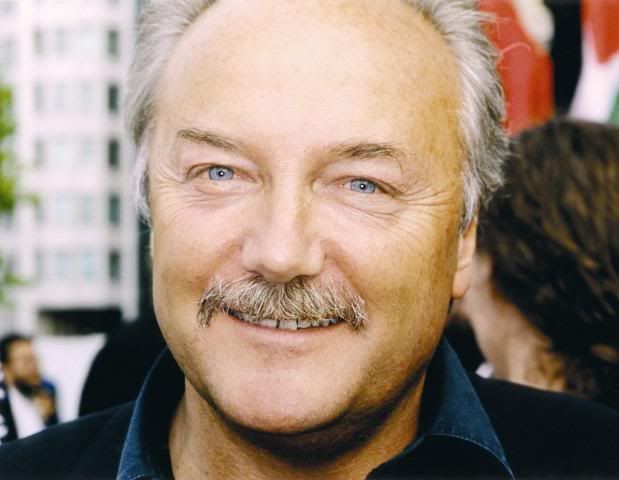
George Galloway, principle representative of the Respect Renewal organisation, has made a number of statements in recent weeks that should trouble those of us who hold principled support for gay rights a cause of worthy support.

On the Wright Stuff Show on Channel Five, Galloway comments on the Independent story "peers call upon Smith to halt deportation of gay Iranian". The article highlights the potential deportation of a gay Iranian, Mehdi Kazemi, from the United Kingdom and the subsequent struggle to prevent this.

Galloway first comment is that "all the papers seem to imply you get executed from Iran for being gay. That's not true" [1]. To understand the factual inacuracy of this statement an overview of the Iranian legal code is needed.

Were Galloway to examine the legal status of those engaging in same-sex sex acts in Iran he would find that his analysis is far from correct. The legal status of Lesbian and gay men in Iran today is established during a period between July 1991 to November of the same year, during which a modified Iran Criminal Code is ratified [2] Articles 108-140 of this criminal code identify the crime of homosexual and lesbian sex acts and the appropriate punishment for those said to have commited them.

For the purpose of understanding these section of the Iranian Criminal Code three translations have been examined, including that supplied by the Iranian Queer Organisation (IRQO) the Movement for the Establishment of Human Rights in Iran (MEHR) and finally the UN Refuge Agency.

We find within these 32 articles an identification of both particular forms of crime pertaining to gay men and lesbian women (identified as Lavat and tafkhiz and Mosaheqeh) alongside an associated punishment of Hadd.

Within the penal code the term Lavat encompasses an understanding of Sodomy as "sexual intercourse with a male". This remains an act identified as a form of Hadd offense, these are serious offenses identifiable in reference to specific punishments. In this instance it is death to be decided by individual Sharia judges having "confessed four times" to having committed the offense [3].

According to the translation provided by all three documents, the criminalisation of same-sex acts is not limited to sodomy. The Islamic Penal Law also stipulates crimes for Tafhiz, defined here as "the rubbing of the thighs or buttocks" committed by two men. This is a crime understood alongside other forms of homosexual act such as the act of a man "kiss(ing of) another with lust".

These crimes are understood as subject to a form of Ta’azir. Ta'azir crimes are understood as involving punishments ranging from six to nighty nine lashes the first three times, the fourth time however "the punishment ... would be death" [3]

Lesbianism is conceptualised within the Iranian Penal Code as "homosexuality of women by genitals". Defined as 'Mosaheqeh' within the translation provided by the Iranian Queer Organisation [4].

Lesbianism remains distinct from male homosexuality within the criminal code. Feminist authors Julie Dorf and Gloria Careaga note that "legal distinction between gay men and lesbianism is that sodomy is defined as uniquely male" [6].

As for lavat and takfhiz, the punishment for moshahegeh involves a form of Ta'azir punishment, 100 lashes for each party, the first three times a confession is gained, while a death sentence will be issued the fourth time [3].

As the original Independent article notes, Medhi's former partner has been executed within Iran. In response Galloway makes the claim that Parham, Mehdi's boyfriend was hung "not for being crime. for committing. um. six crimes. er. against young men" [1]. Pausing briefly to expand upon this point a number of points are worthy of consideration.

In a statement released by Mehdi he notes that "I was 15 years old when I started dating one of my class mates in school. His name was Parham" [7]. What followed was a relationship that lasted up until the point at which around March 2006 Parham had been arrested and mentioned Mehdi's name to the government under 'interrogation'.

The first point worth making is that there is no way of ascertaining if Parham was executed for the crimes stipulated within the Iran Criminal Code, however this execution was committed in a context in which, as queer organization Outrage! note:
Claims of rape are made to save the family's honour or to save the passive partner from execution, and are part of an Iranian government propaganda offensive to scapegoat and demonise gay people
In this context, it seems a highly credible explanation that Parham was executed for the crime of homosexuality, and his naming of Mehdi as involved in these acts would seem to have formed part of this investigation into this offense.

Speaking at the 2008, March 15th Stop the War demonstration Galloway commented, in reference to protests from the audience, that “the khaki war machine now has its pink contingent” [8]. This remains a slur on those anti-war activists who combine principled opposition to Invasion of Iran with a commitment to the rights of those Lesbian and Gay individuals within Iran George Galloway seems not to recognise.


[1] http://www.youtube.com/watch?v=Ou1es7fNTpk
[2] http://www.iranian.com/Opinion/2005/December/Homosexuality/index.html
[3] http://www.unhcr.org/cgi-bin/texis/vtx/refworld/rwmain?docid=3ae6b51b8
[4] http://www.irqo.net/IRQO/English/islamicpunishment.htm
[5] http://www.unhcr.org/cgi-bin/texis/vtx/refworld/rwmain?docid=3ae6b51b8
[6] [Women's Rights, Human Rights: International Feminist Perspectives: 325]
[7] http://www.irqo.net/IRQO/English/pages/43.htm
[8] http://modernityblog.wordpress.com/2008/03/16/gallway-and-the-colour-pink/

Monday, 10 March 2008

Socialist Party and the Commanding Heights


Reading Marxist Economist Rudolf Hilferding on finance capital I came across the Hilferding quote that "taking possession of six large Berlin banks ... would mean taking possession of the most important spheres of large scale industry".

Writing in the introduction to the translation, Tom Bottomore recognises that Hilferding would not equate this process with socialism, instead understanding this as one step on the road towards it, he does however suggest that:
the development of the capitalist welfare states since WW2 has depended very largely on gaining control of the 'commanding heights' of the economy in this sense, and that any further advance towards democratic socialism in the Western societies can only follow the same course (Finance Capital, Hilferding:9)
I presume that Bottomore is working upon the same distinction Hilferding refused to make between the formal 'bourgeois democracy' of the Weimar republic and the proletarian democracy that would be sought to replace it. A view largely in accord with the notion that thanks to the 'socialization' of the economy it no longer become necessary for the state to be 'smashed', but instead "taking it over and extending its role in planning and controlling socialized production" was the necessary step towards socialism (9).

However the notion of 'conquering the commanding heights' of the economy (as a step either towards, or the realization of, Socialism) retains a relevance beyond the fact that it has been "predicated for almost a century by the leaders of the social democratic labour movement" (106 Mesaros)

It was the Labour- entryist organisation, Militant, who argued that Socialism could be achieved by an "enabling bill" passed through parliament. Within Militant issue 767b, 27th September 1985 we find the following suggestion from Rob Sewell:
A Labour government is always elected in times of crisis, when the desire for change is at its highest . . . Instead of bowing the knee to capital and hoping to run capitalism better than the Tories, it should immediately push through an emergency `Enabling Act' through Parliament.
Former Socialist Party member Comrade Michael Wainwright challenged the party to provide a justifiction of the politics in an article titled Marxism and the state: an exchange. Seeking to defend the indefensible the Socialist Party's Lynn Walsh replied with the suggestion that such action must be taken in association with "a plan of production, and workers’ control and management of industry", which of course must be international. That the comrade felt the need to suppliment the demand for the Labour Movement to take control of the "commanding heights of the economy to be nationalised" as a means towards achieving Socialism, with the need for "workers control" is all the more pognient given the relative abscence of any discussion of workers control in articles calling on the Labour government to Nationalise Northern Rock during much of the discussion of the 'looming recession'.

In Issue 517 of the Socialist in a short piece titled 'Shock of Recession draws near' the paper limits itself to favourably quoting Liberal Democrat Vince Cabel, the logical culmination of this politics is an article that would not be out of place among any one of a number of Liberal Democrat Party press releases. The Socialist Party note in the same issue of the paper that at the time the Labour Government was already "effectively part nationalising the bank". Why did it do so? It should come as no suprise to comrades that it would go on to Nationalise the bank "simply as a temporary response to a crisis, to be contained within the overall determination of capital as a mode of control, without affecting in any way whatsoever the fundamental command structure of the system itself" (Meszaros, Beyond Capital: 106).

The justification of this politics from Walsh, which the comrade admits "would not add up to a socialist society" is an understanding of the "partial" nature of Transitional Demands. The only problem being in this instance that the demands are in no way transitional. Rather more ingenious, than the fig-leaf of Transtionalism, is the suggestion by Comrade Walsh that such moves would provide the "social foundations on which the working class could proceed to build a socialist society". This view maintains an intellectual continuum with the politics of the Social Democratic Labour Movement though certainly not with Leon Trotsky.

Friday, 7 March 2008

Student Respect: "Be reasonable, demand the possible"


The role of Student Respect post Galloway has been an interesting topic of contention among many leftists: what would happen to the formation following its split at a national level we all mused. Prior to this split many of us witnessed long-standing comrades within the Socialist Workers Party (SWP) ditching depleted Socialist Worker Student Society (SWSS) meetings for ‘vibrant’ joint Respect events, Comrades close to the political project of the Socialist Workers Party rebranded themselves as ‘Student Respect members’ within the pages of Socialist Worker and on campuses for the sake of the party’s latest turn.

With good reason too, as SWP Central Committee member John Rees noted in response to Galloway, the SWP has “sunk significant resources into creating Student Respect” [1], without a trace one might have added. The need to substantiate the rationale for such a move with the talk of ‘great gains ahead’ makes political sense in this context.

On that basis in September of 2007 John Rees provided the following suggestion:
(Student Respect) … has had significant electoral success in local colleges and at the NUS conference. Student Respect has reshaped the left in the colleges
We may ask what to make of reports of the recent gains of student Respect in campuses as wide ranging as Essex and Goldsmiths in reference to this quote.

A report in the 8th of March issue of Socialist Worker noted the election of what were billed as a 'left slate' of 7 candidates. Beyond the spin, the gains made at Goldsmiths were not those of the SWP, but instead the rather heterogeneous sounding 'left' [2]. Only two of those elected were actually Student Respect members: Campaigns and Communications Officer, Jennifer Jones and James Haywood, Campaigns Coordinator. Prior to the election Respect were listing only Jennifer Jones and Grace Lally as Respect Candidates under the optimistic sounding heading: “this month we can take Goldsmiths back” [3]. Returning to the Socialist Worker 'Reports Roundup' the conclusion drawn on the basis of this election, namely that “this vote shows that radical politics are winning a massive hearing among students” seems even less assured.

Candidates stood on platforms almost indistinguishable from those of non-slate candidates. There was no direct mention of the subordination of education to the needs of a market economy within the manifestos of the Student Respect comrades; Where mentions of cuts to services do exist, it is only on the basis of the suggested mis-management of a University that "treats our Union with complete contempt" and the need for a better managed Union. Variations of similar themes ran through-out the election manifestos of all contestants. Noting that the union should be a "campaigning force on behalf of all our members" retains very little purchase in a context in which both left and right have adopted similar rhetoric of accountability and democracy, if just for the sake of getting elected.

While the references were different, and i'm certain the intentions varied, both left and right broadly accommodated themselves to the bureaucratic and largely economistic character of left student politics.

The manifesto of Student Respect member Grace Lally noted the sorry state of student politics in reference to the fact that: "Goldsmiths used to be synonymous with radical student activism" [4]. Ironically the comrade has a point.

Were they to probe the issues 'of relevance to students' at a slightly deeper level they may come to the conclusion that reforms identified on the basis of the needs to render education more responsive to a market economy are not a new phenomenon. The 1960s Fouchet Reforms (named after the then Minister of Interior from 62 to 67) proposed to "install more difficult entrance exams, a more intense selection process, and a sort of “second-rate” degrees, which would be available after two years of study" [5]. Opposition to the Fouchet Reforms would form part of the radicalised student movements leading to May 1968. A movement that would influence the role played by students outside of France, popularizing the use of occupations of University buildings.

The comrade politics is all the more interesting in a context in which the slogans inspiring these "radical movements" find little echo among the existing left. We should have no illusions in documents produced during the period, the politics often expressed remained deeply flawed and partial. However, the willingness to engage with the the implications of Modern capitalism for education, beyond simply lamenting its manifesations, is athema to Student Respect's political project.


[1] http://www.labourhome.org/story/2007/9/19/32556/3993
[2] http://www.socialistworker.co.uk/art.php?id=14309
[3] http://www.respectcoalition.org/?ite=1768
[4] www.goldsmithsstudents.com/export/sites/Goldsmiths/upload_gallery/ManiBooklet.pdf
[5] minds.wisconsin.edu/bitstream/1793/18448/1/GatesVickeryS07.doc

Thursday, 6 March 2008

Venezuela & Chavez


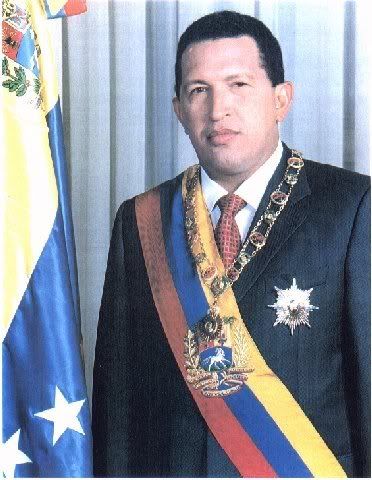
The Weekly Worker claims a unique position on the basis of the majority of the “leftist commentators” who have provided commentary upon a fairly limited section of the ‘progressive’ reforms within the proposed constitutional amendments, at the expense of those which sought to consolidate the arguably substantial power base of the Venezuelan leader (Chavez Suffers Major Constitutional Setback). The WW is quite right to note the absence of an engagement precisely on the ‘democratic deficit’ apparent within the proposed reforms of the Venezuelan constitution.

The role of Marxists on this basis is clear: to understand the nature of Venezuelan presidency and on this basis draw necessarily correct conclusions. Related to this point, Nick Rogers is right to highlight the need for an independent Working Class voice.

In reference to the ability to cultivate such a voice, it is perhaps worth making explicit the fact that “tying the working class and its organizations to bourgeois ruler serves to impede independent working-class struggle”. Related to this point, the need to “establishing the class independence of the proletariat from all wings of the bourgeoisie—no matter how “progressive” or “anti-imperialist” their proclamations [1] remains readily apparent during this process, alongside the role of a revolutionary, internationalist workers party through which this aim may be realised.

The potential for the consolidated power of a bourgeois ruler to in turn be used against an independent working class force may been noted in reference to the fact that “the presidency – no matter who occupies it – remains an institution of the bourgeois state which be it said revolutionaries are in favour of totally abolishing not strengthening” [2] as Workers Power have rightly suggested.

Despite this Workers Power curiously criticise the “modesty” of the proposed reforms for not abolishing the “the 1999 constitution's protection of private ownership of the land, the factories, the banks, the media etc”. Such an approach of course ignores that such provision would be unlikely to be destroyed precisely because these remain intrinsic to the nature of Chavez’s bourgeois political project. The role of Marxists during this process is not to challenge the ‘immodesty’ of such leaders but to instead turn to those organised forces able to play a progressive role within the region, precisely by ‘sweeping away’ the bourgeoisie regime.


[1] http://www.spartacist.org/english/wv/archives/oldsite/2004/Venezuela-831.html

[2] http://www.workerspower.com/index.php?id=156,1498,0,0,1,0